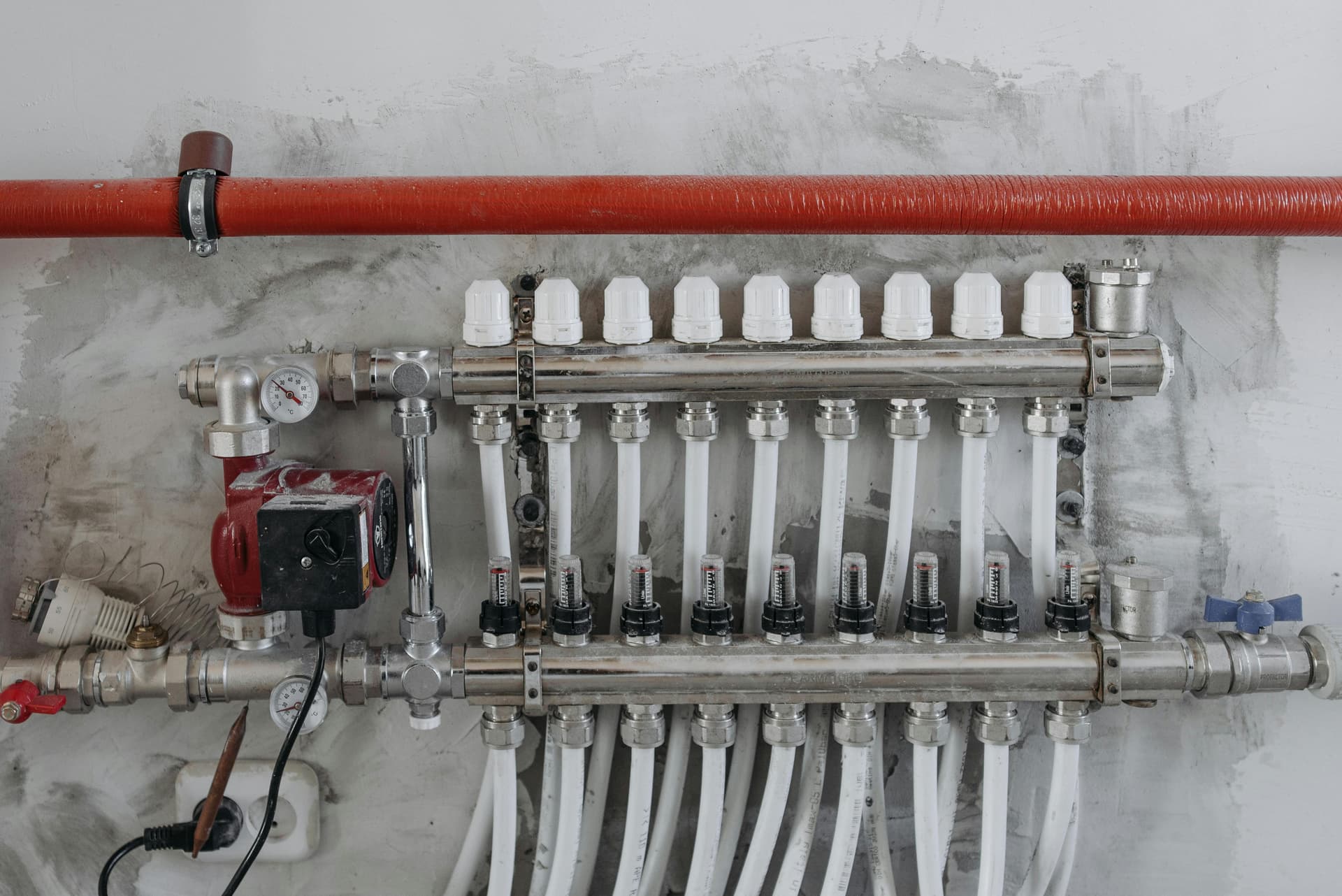
Underfloor heating is bought for the feeling of a warm floor and kept for something less obvious: an entire room radiating gently at low temperature, no radiators eating wall space, and heat that suits modern low-temperature heat sources perfectly.
G R Plumbing installs wet underfloor heating across Caterham, and this is what the system actually asks of a floor before any of that arrives.
Height is the first constraint
Every wet system adds build-up: insulation, pipework and screed or a low-profile panel above the existing floor. That height has to be found from somewhere, and it lands on doors, thresholds, stair bottoms and the junctions with rooms that are not being changed.
In a new extension or a floor being dug out anyway, the height is free. In a retrofit into a finished room, it is the whole feasibility question, which is why the tape measure comes out before the brochures.
- Insulation, pipe and screed all add height.
- Doors, thresholds and junctions absorb the difference.
- New floors are easy; retrofits are a measurement problem.
Screed or low-profile
A traditional screeded system buries the pipework in a substantial layer that stores and releases heat slowly and evenly: excellent comfort, slower response, more height, and drying time before flooring can go down. Low-profile systems trade some of that thermal mass for a fraction of the height and a faster response.
The choice follows the room: a new build or a dug-out floor usually takes screed comfortably, while a retrofit into an existing kitchen frequently only works low-profile. G R Plumbing specifies against the actual floor rather than a preference.
- Screed: even, slow, comfortable, tall, needs drying time.
- Low-profile: shallow and responsive, less thermal mass.
- The existing floor usually makes the choice.
Floor coverings that cooperate
Tile and stone are underfloor heating's natural partners: they conduct well and never mind the warmth. Engineered timber works when specified for underfloor use and installed to the maker's rules. Thick carpet and heavy underlay insulate the heat away, which is the commonest cause of a system that never feels warm enough.
The covering is therefore part of the design, not a decoration chosen afterward. Deciding it before commissioning also lets the flow temperature be set for the floor that will actually be there.
Running it the way it wants
Underfloor heating is a slow, steady system with real thermal inertia: it rewards long gentle running and punishes the on-off habits a radiator system tolerates. Set it to hold a temperature rather than chase one, and expect it to respond over hours, not minutes.
That patience is exactly why it suits heat pumps: its huge emitting surface performs beautifully at the low flow temperatures that make a heat pump efficient. A house with underfloor heating already installed is a house already partway prepared for a modern heat source.
Related pages
Questions customers ask
Can underfloor heating be retrofitted into an existing room?
Often, using a low-profile system, provided the added height works at doors and thresholds. That measurement decides feasibility more than anything else.
Does underfloor heating work under carpet?
Only with a low-tog carpet and underlay combination. Thick carpet insulates the heat away and produces the classic complaint of a system that never feels warm.
Is underfloor heating good with a heat pump?
It is an excellent match: the large emitting surface performs well at the low flow temperatures that make heat pumps efficient, which is why rooms with it usually anchor a conversion.
Measure the height, choose screed or low-profile from the floor you actually have, pick a covering that conducts, and run it steadily. Those four decisions make underfloor heating live up to its reputation.
G R Plumbing installs it across Caterham. The contact page starts with the floor.