A change in shower pressure is much easier to investigate when the pattern is clear. The useful details are not a guessed cause but what changed, which outlet showed it, whether the water was hot or cold, what else was being used and whether the same thing happened again.
Before contacting a plumber, Dorking households can spend a few ordinary uses building that record. G R Plumbing provides plumbing, bathroom and unvented hot-water work. Its own quote guidance puts the emphasis on where a fault appears, visible pipework, access, water pressure, cylinder details and the way hot water is used. Those observations turn “the shower feels wrong” into a focused first conversation.
Begin with the outlet, not a diagnosis
Start by naming the exact place where the change appears. Is it one shower, every hot tap, one basin or both hot and cold water in the room? Record what you can see and feel without deciding why it is happening. “The shower flow becomes weaker after two minutes” is useful. “The pump is failing” is a diagnosis that the observation does not prove.
Check whether the issue belongs to the outlet or to a wider pattern by noticing the other taps during normal use. If the basin behaves as usual while the shower changes, write that down. If several outlets change together, record that instead. The location of the symptom helps separate a simple fixture question from work that may need wider investigation.
Keep pressure, flow and temperature on separate lines
People often use “pressure” to describe three different experiences: less water coming through, water arriving with less force, or temperature moving while the flow seems steady. You do not need to measure these precisely. You do need to describe them separately so one symptom does not hide another.
Use plain comparisons. Note whether the stream looks visibly smaller, whether the change affects only hot water, and whether the temperature becomes cooler, warmer or simply uneven. Add how long the shower had been running when it happened. A short sequence is more useful than a single adjective.
Compare ordinary quiet and busy moments
Hot-water demand matters, especially when more than one person or outlet uses stored water. Record what the household was already doing when the change appeared: another shower, a bath filling, a hot tap running or no other water use at all. Do not create an artificial stress test. Capture the routine that already produces the problem.
Time of day can help organise the account without implying a cause. A change that appears only during the morning routine is different from one that happens on every use. Two or three dated notes can show whether the pattern follows simultaneous demand, the length of use or neither.
Record the hot-water system without adjusting it
If the property has a hot-water cylinder, note the make and model from an accessible label, the cylinder type if it is already known and where it is located. G R Plumbing’s unvented hot-water guidance also identifies pressure symptoms, discharge pipework, controls, stored-water demand, access, visible leaks and service history as relevant details.
Photograph only what is safely visible. There is no need to remove a cover, alter a control or touch pipework to improve the record. If a pressure reading or fault code is already displayed, copy it exactly and say when it was seen. If a pipe, label or control is concealed, write “not visible” rather than filling the gap with a guess.
Show the bathroom as a connected room
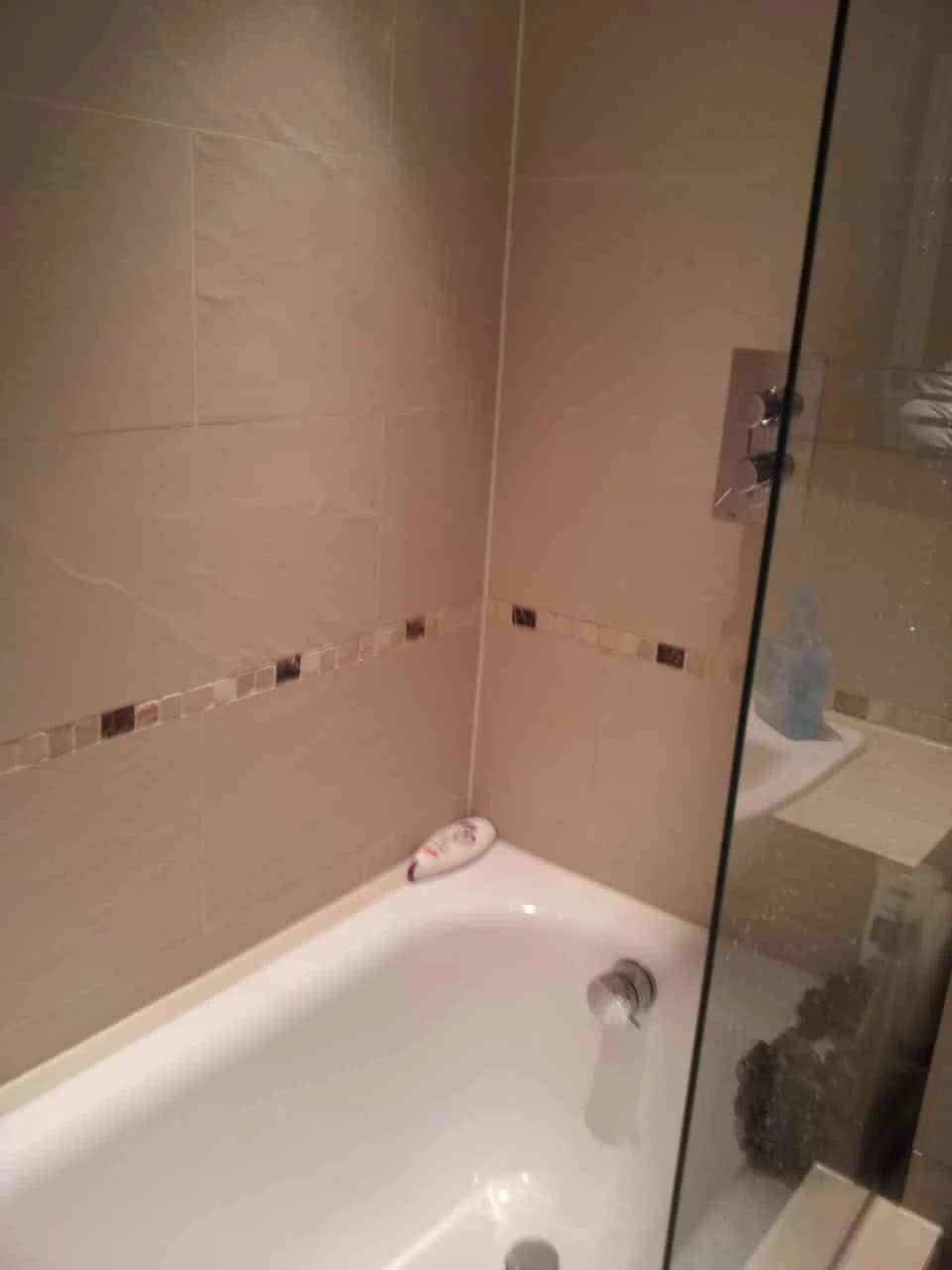
Bathroom work is shaped by more than the shower itself. Room layout, waste routes, water pressure, ventilation, fixture choices and access needs can all affect the scope. Take one wide photograph from the doorway, one showing the shower and its controls, and one of any visible pipework or mark that relates directly to the enquiry.
If the shower changed after a new fitting, a layout alteration or another recent piece of work, include the date and describe only what changed. Keep paperwork, mirrors showing people and personal items out of the frame. The aim is to show the relationship between the outlet, room and accessible services.
Build one short symptom record
Put the evidence in time order rather than scattering it through several messages. A useful record contains:
- The exact outlet and whether hot, cold or both are affected.
- What “changed” means: flow, force, temperature or a combination.
- When it started and whether it happens every time.
- What other water outlets were in ordinary use at that moment.
- Any visible leak, display reading or fault code, copied without interpretation.
- The known cylinder or appliance details and accessible service history.
- Wide and close photographs labelled by location.
Add the preferred outcome in one sentence. That may be restoring the previous shower performance, understanding a repeated change or planning a bathroom alteration. The desired result helps distinguish repair, investigation and planned installation before the recommended scope and quote are agreed.
Know what photographs can and cannot settle
Clear notes and photographs can make the first check more productive, but they do not settle concealed access, measurements, material choice or the current condition behind a finished surface. A final quote may still depend on seeing the system and room directly.
Send the record as evidence, not as a remote diagnosis. G R Plumbing can then review the visible pattern, the household’s hot-water use, the room layout and the access that is known before deciding what needs to be checked next.
Questions customers ask
Should I run several taps at once to reproduce the problem?
Record the normal household routine that already reveals the change. There is no need to invent a test. Note which other outlets were naturally in use and what happened at the shower.
Can a shower-pressure problem be quoted from photographs?
Photographs and clear notes help with the first assessment, but access, measurements, material choices and current condition can still affect the final quote. Treat hidden routes and components as unknown until checked.
What if I can see a leak or an unfamiliar discharge?
State exactly where it appears, when it appears and whether it is changing. Photograph it only from a safe, accessible position and avoid adjusting controls or removing covers for the sake of the enquiry.
Read about bathroom work and unvented hot water, then send the symptom record through the contact page. A precise pattern gives G R Plumbing a better starting point than a confident guess.