Bathroom refits rarely go wrong because someone chose the wrong tile. They go wrong because a decision arrived after the stage that needed it, and a wall had to be reopened to accommodate a change that would have been free a week earlier.
G R Plumbing refits bathrooms across Caterham, and this is the sequence, with the decision deadlines marked.
Strip-out: where the surprises live
The old suite and tiling come out and the room tells the truth: the state of the wall behind, the floor under the bath, any historic weep that has been quietly rotting timber. Discoveries at this stage are normal, and the professional handling is to show them, price them and agree them before continuing.
It is also when the layout meets reality. The toilet's soil connection is the least movable thing in the room, and how far fittings can travel from their current positions becomes a fact rather than a hope.
- Expect discoveries; require them shown and priced.
- Soil connection anchors the layout.
- Rot found now is a repair, later a delay.
First fix: the point of no cheap return
First fix moves supplies and wastes to their final positions, sets shower valve heights and depths, and puts in the reinforcement that wall-hung fittings, rails and cabinets will rely on. After this, changes cost multiples because walls have to be reopened.
So the decision deadline is here, not later: fittings chosen, positions marked on the walls, and the household standing in the room agreeing them. Fifteen minutes at this stage prevents most bathroom regrets.
- Positions marked and agreed with the household present.
- Reinforcement in for everything that will hang.
- Changes after this stage cost walls.
Waterproofing, then tiling
The wet zones get suitable backing board and a proper tanking system before any tile is fixed. It is invisible in the finished room and it is the only thing standing between the shower and the structure, which is why it is worth seeing before it disappears.
Tiling then carries the sequence's built-in waits: fixing, then grouting once adhesive has cured, then sealing. A programme with no waiting in it has compressed something that should not have been compressed.
Second fix and the handover
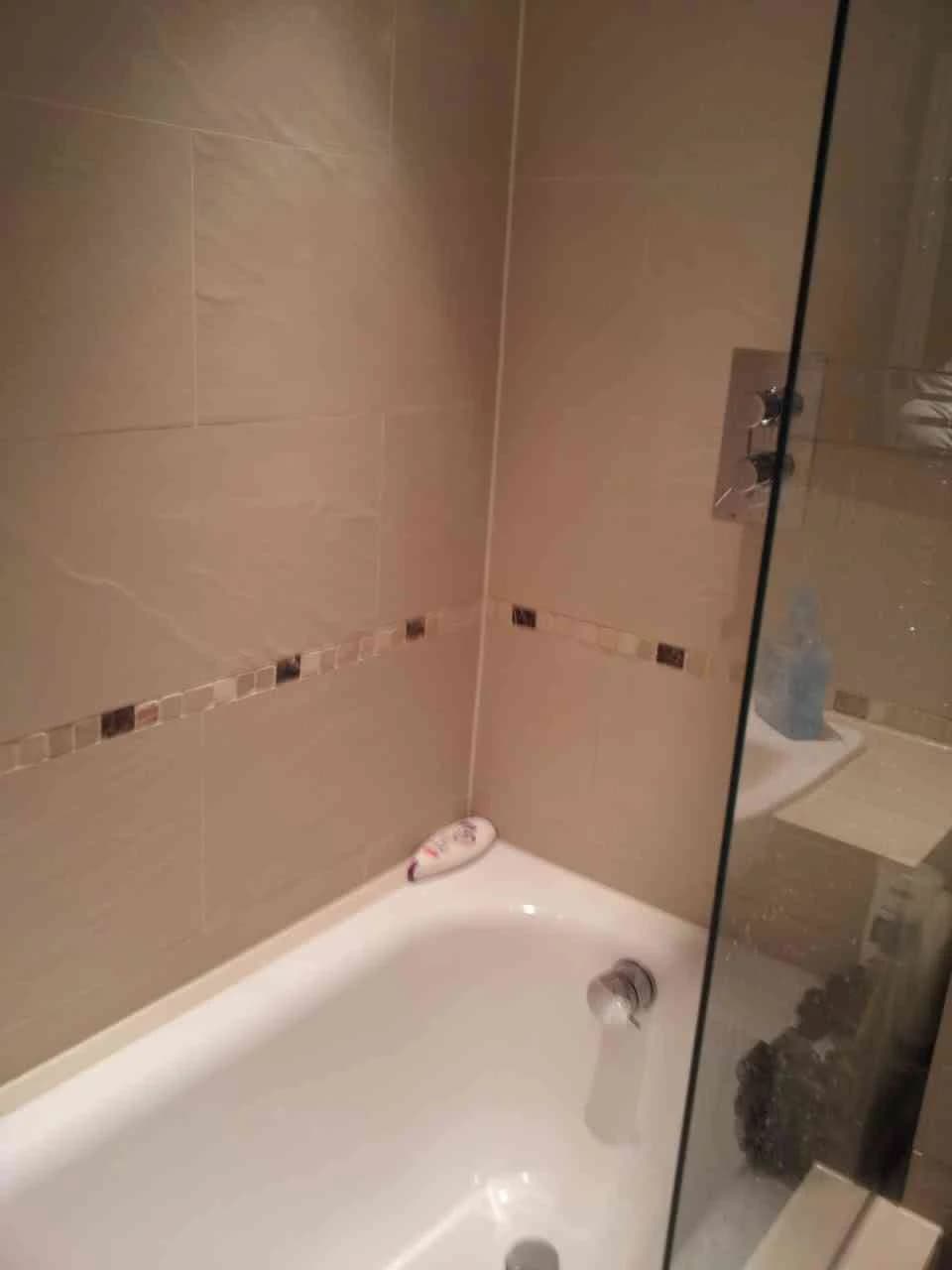
Second fix is fast because everything before it was right: suite set, valves connected, extractor wired, flooring laid, silicone last. The room looks finished slightly before it should be used, because silicone and grout need curing time.
The handover is worth doing deliberately: run everything at once, flush twice, look under the bath panel with a torch while water drains, check the extractor actually moves air, and open every drawer. Anything found while G R Plumbing is still on site is trivially fixed.
Related pages
Questions customers ask
When do I need to have chosen everything?
Before first fix completes. Positions, fittings and finishes all shape the pipework and reinforcement going in behind the walls, and changes after boarding cost significantly more.
Why does a bathroom take longer than the work seems to need?
Curing time: adhesive before grout, grout before sealing, silicone before use. Those waits are doing real work even though nothing appears to be happening.
What should I check at handover?
Run every outlet together, flush twice, watch under the bath while the water drains, confirm the extractor moves air, and check the silicone lines are complete and even.
Decisions before first fix, waterproofing before tiling, curing time respected, handover taken seriously: the sequence is the craft.
G R Plumbing runs Caterham bathroom refits to it. The contact page starts with the room.